Published : 2025-07-11
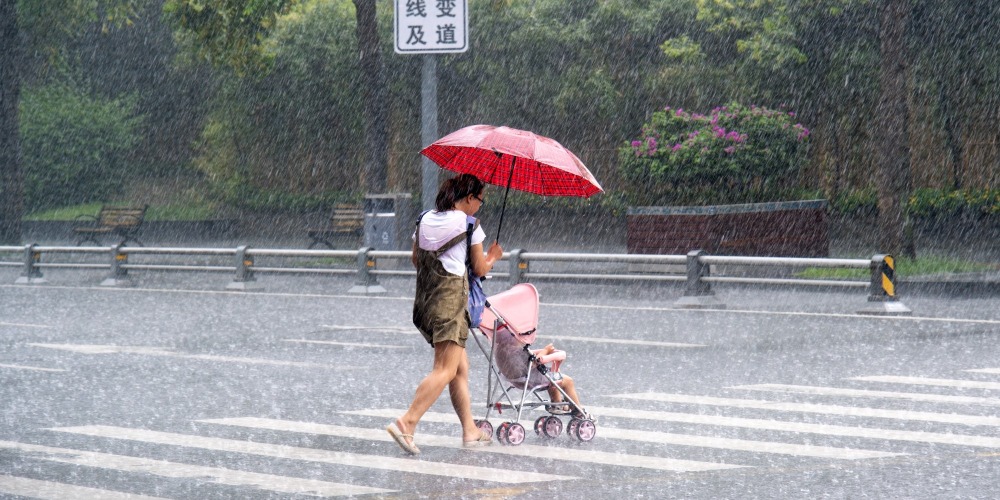
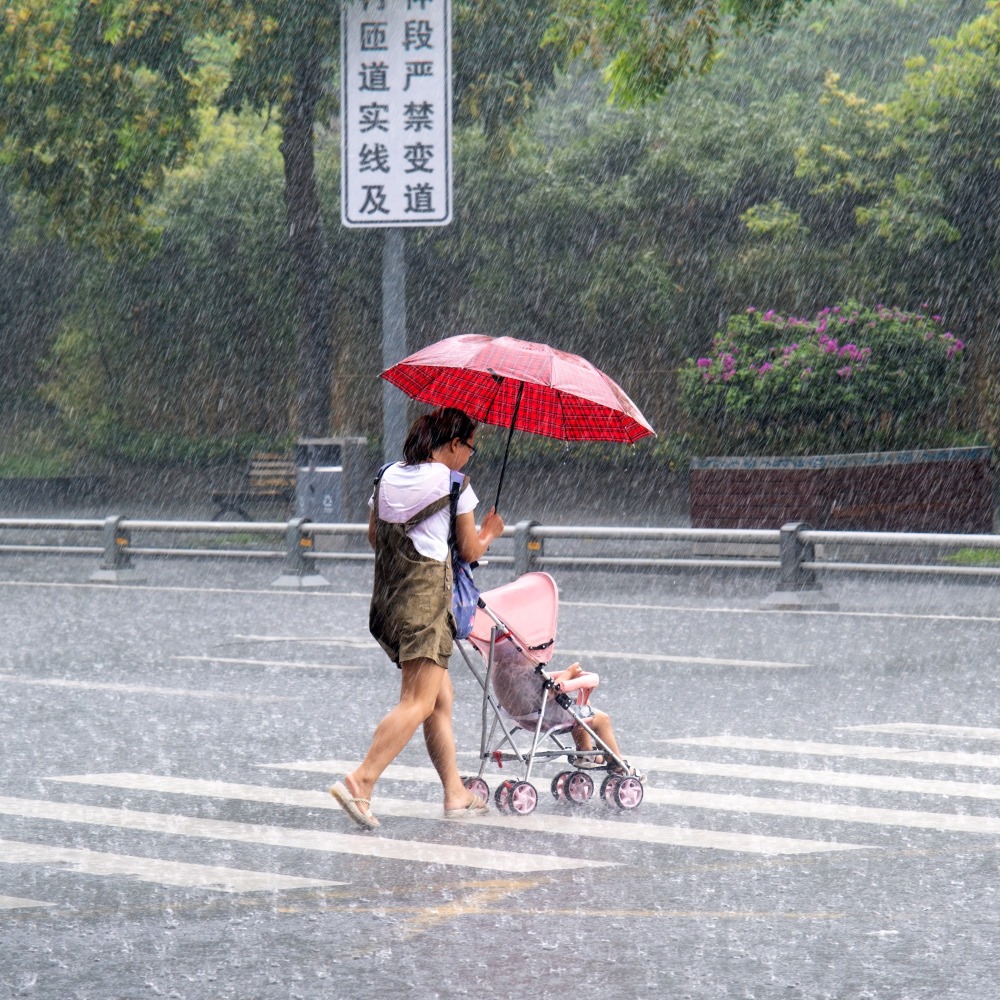
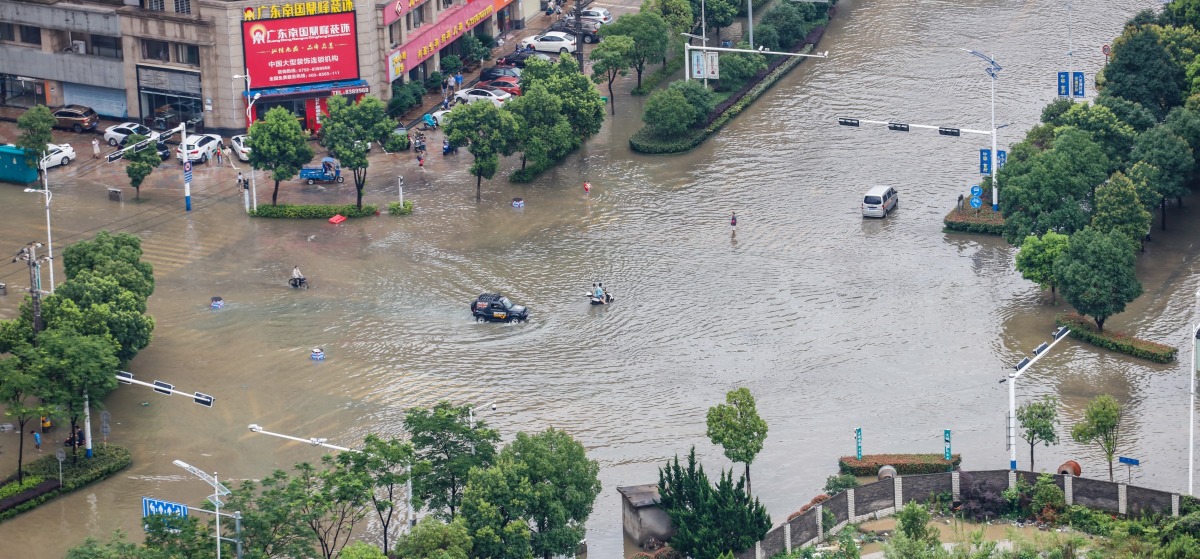
As the rainy season arrives, Hong Kong turns damp and rainy, with the city even issuing two Red Rainstorm Warnings in a single day, significantly disrupting work and school commutes.
Just across the river, Shenzhen operates its own nationwide color-coded rainstorm warning system, known as the "four-color warning" signals.
What are these four colors? What precautionary measures do they guide? And how do they differ from Hong Kong's system?
Four-colour warning signals: Blue, Yellow, Orange, Red
Hong Kong Observatory has a rainstorm warning system categorized from low to high as "Yellow," "Red," "Black," which citizens shorthand as "Yellow Rain," "Red Rain," and "Black Rain."
In Shenzhen, there are four levels categorized from low to high as "Blue," "Yellow," "Orange," and "Red," which is a unified nationwide warning system.
According to information on the website of China Meteorological Administration, there is a detailed description of the "four-colour warning" system.
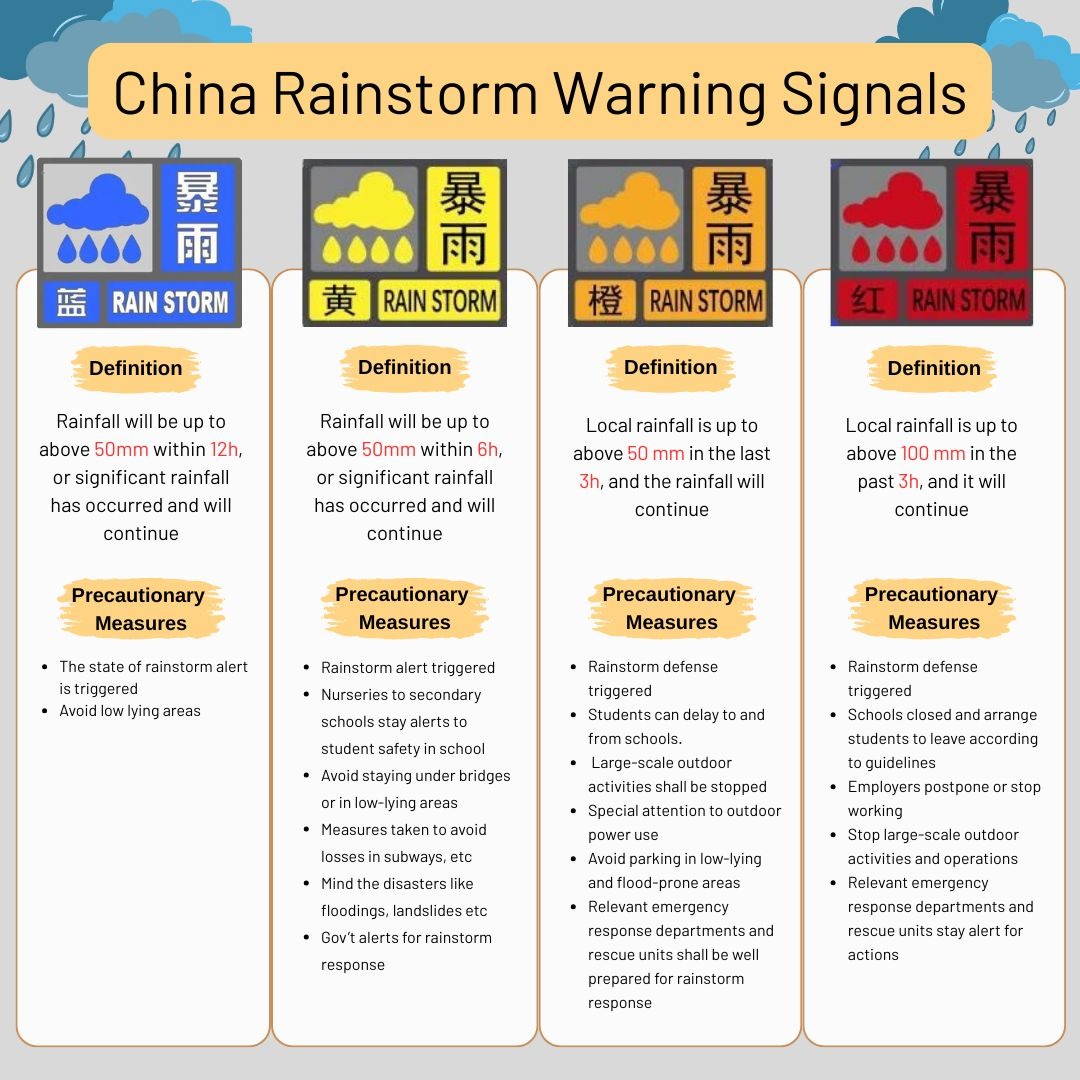
From the table above, both blue and yellow rainstorm warning signals indicate a state of rainstorm alert, showing that the rainfall within a certain period will or has reached at or above 50mm, and there are signs it will continue.
At this time, citizens, schools, and institutions begin to enter into a rainstorm alert state, avoiding low-lying areas to ensure personal safety.
The orange rainstorm warning signal indicates entry into the "rainstorm defense state;" at this time, schools are suspended, institutions can suspend work, traffic control is initiated, high-risk areas are evacuated, and measures are taken to prevent disasters such as flash floods or landslide.
When a red rainstorm warning is issued, it signifies entry into the "emergency rainstorm defense state," wherein all activities are essentially stopped, and emergency departments are well prepared for rainstorm response.
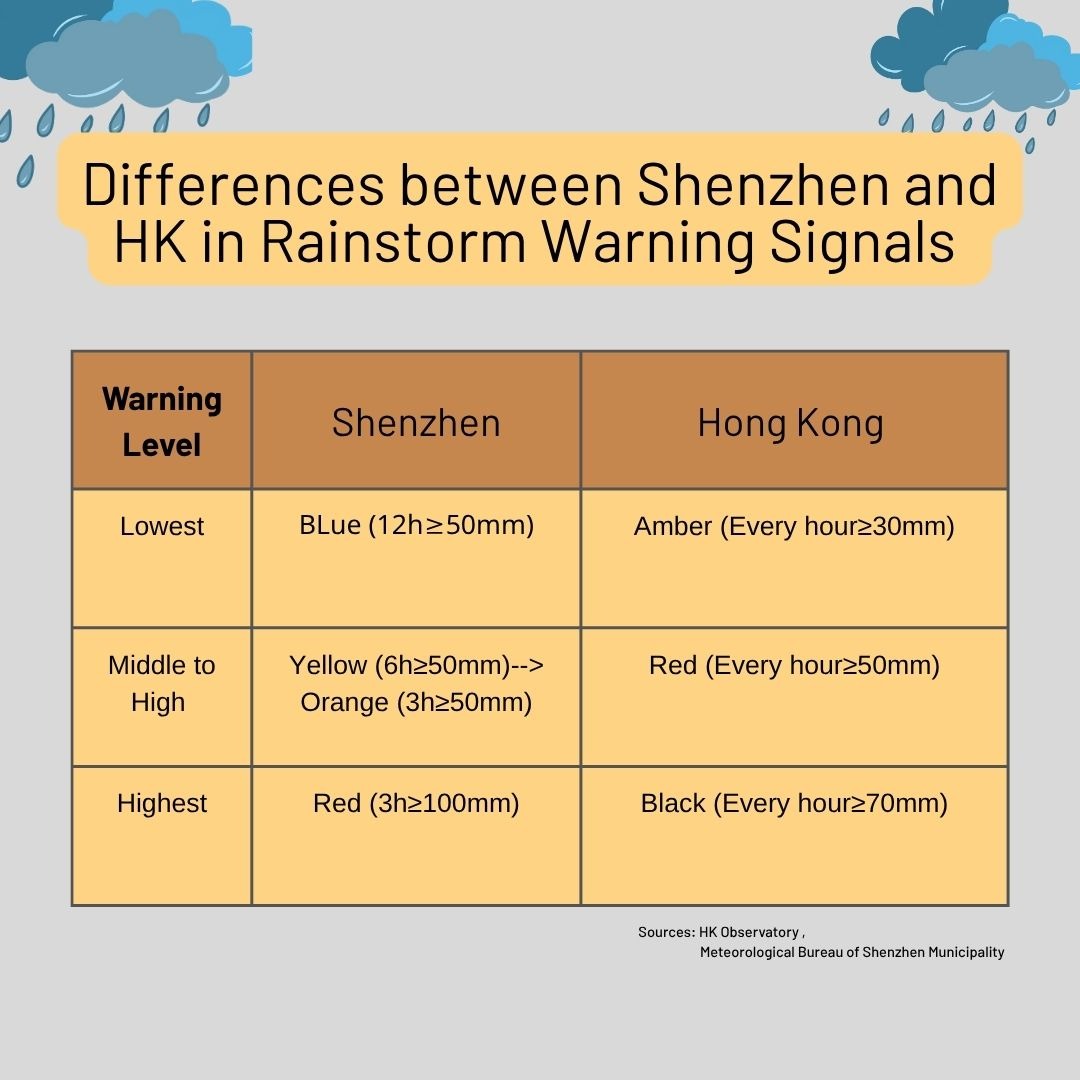
Is Shenzhen's Red Signal equals Hong Kong's Black Signal?
According to the table below, the red rainstorm warning signal in Shenzhen roughly matches the black one in Hong Kong, so Hong Kong citizens need to pay extra attention to the weather condition.
China's vast territory features diverse landscapes—high mountains, low-lying areas, and coastal regions—each experiencing varying levels of impact from rainstorms.
Therefore, the state allows local governments to adjust their issued warning signals based on actual rainfall conditions. However, two elements cannot be changed: the color levels and the design of the warning icons must remain strictly uniform nationwide.
Shenzhen-HK Rainstorm Warning Communication Mechanism
The Guangdong area where Shenzhen is located, is particularly susceptible to rainstorms, so the warning signals are adjusted based on different levels of rainfalls.
Shenzhen, being a typhoon-prone area, has two unique features in its warning system.
First is the greater focus on extreme short-term rainfall. There is an example. On July 9 this year, Meteorological Bureau of Shenzhen Municipality forecasted 50mm of rain within 2 hours.
Even though it did not meet the 3-hour requirement, it immediately announced an orange warning signal for a number of districts including Luohu and Nanshan districts, while the yellow warning signal extended to the whole City, immediately entering into the rainstorm defense state.
The second feature is the coordination mechanism between Hong Kong and Shenzhen.
The heavy rain warning information issued by Meteorological Bureau of Shenzhen Municipality is communicated through the Guangdong-Hong Kong-Macao Greater Bay Area Weather Research Center for Monitoring Warning and Forecasting GBA-MWF jointly established by Guangdong, Hong Kong, and Macau.
It allows the Hong Kong Observatory to respond in a timely manner, making it safer for HK citizens when they are going to the north.
Simple ways to easily check Mainland weather
How can Hong Kong citizens get meteorological information from Shenzhen and other Mainland cities?
Firstly, citizens can visit the Shenzhen Meteorological Bureau and other local meteorological bureau websites. The "Warning Signals" section on the China Weather Network also provides warning information.
Moreover, the Weather Website for GBA helps to check weather conditions in Guangdong, HK and Macau which is very useful.
In addition, the WeChat mini programme "National Emergency Broadcast Warning Mini Program" allows users to locate and inquire about real-time warnings and standards for Mainland cities.
As the rainy season approaches, it's a good idea to check the Mainland's weather information in advance before travelling.
Read more: K11 ECOAST: a new cultural and retail landmark in Shenzhen
Read more: A 1.5 trillion RMB industry: Why are China's drones soaring high?